
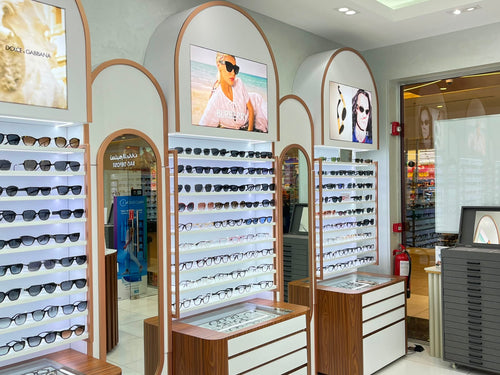
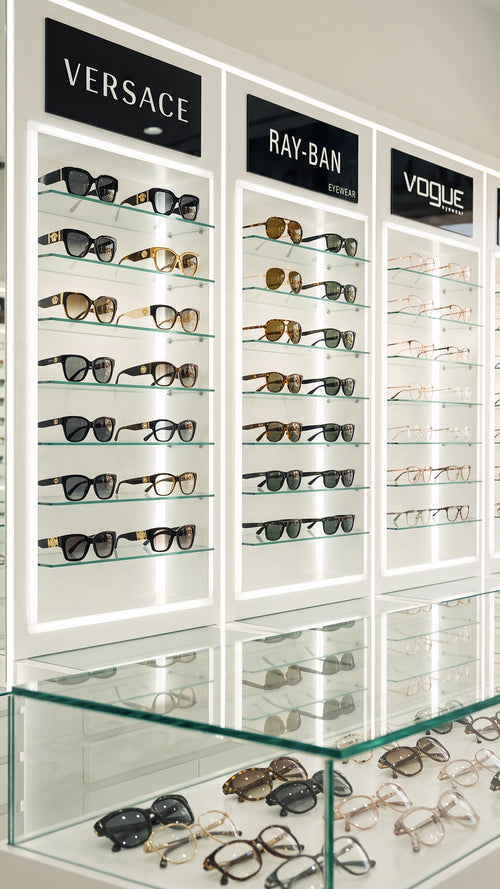
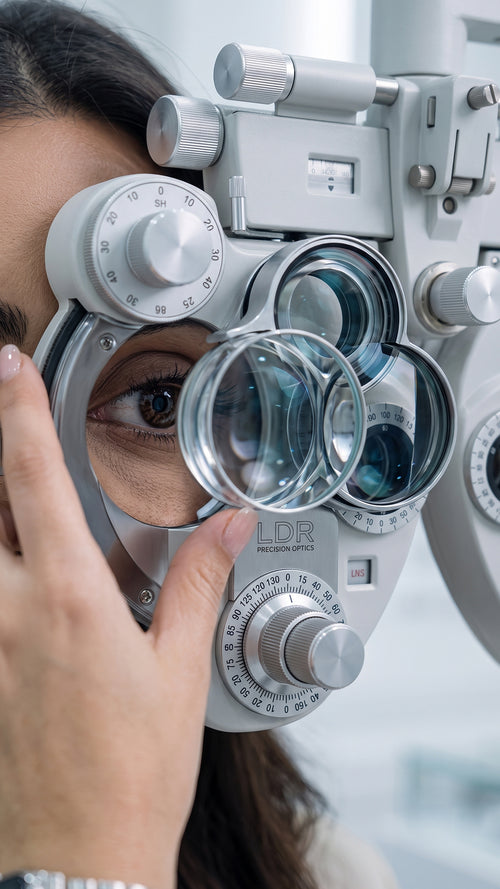


You'll wear them every day for about two years. On your face. In every photograph, every meeting, every conversation.
And most people pick them in twenty minutes, at whichever shop was nearest.
The frames are honestly the easy part. Anyone can look at a wall of frames and work out what suits them. What decides whether you're still happy with that purchase eighteen months later is a handful of things nobody thinks to ask about at the counter.
Ask Who's Actually Doing Your Eye Test
This is the one that matters most and the one nobody asks.
Optometrists in Qatar are licensed by the Department of Healthcare Professions, under the Ministry of Public Health. Getting that licence means a recognised optometry degree, two years minimum of clinical experience, credentials verified through DataFlow, and a passed Prometric exam.
Now, three different job titles get used interchangeably in conversation, and they're not the same thing at all:
An ophthalmologist is a medical doctor. Eye disease, surgery, that end of things.
An optometrist is DHP-licensed, does the full eye examination, and writes your prescription.
An optician fits and dispenses eyewear against a prescription somebody else wrote.
All three are real, useful roles. But there's a difference between a full examination and someone taking a machine reading, and if it isn't a licensed optometrist doing your test, you're getting the second one.
That gap matters most for exactly the people least likely to ask about it. Kids. Anyone past forty. Anyone with diabetes in the family.
So just ask. A decent shop won't hesitate.
Time the Eye Test
Rough rule: if the whole thing took five minutes and involved reading a chart, that wasn't an examination.
A proper one checks distance and near vision, looks at how your eyes work together, actually assesses eye health rather than just working out your prescription, and asks what you do all day. Nine hours staring at a screen produces different needs from driving the Salwa Road at three in the afternoon.
You can end up with a prescription that's technically right and glasses that still feel wrong. That's usually what happened.
Free eye tests are everywhere in Qatar and there's nothing suspicious about them. Plenty of good shops offer them with a purchase. Free isn't the problem. Rushed is.
Everyone Overthinks Frames and Underthinks Lenses
Frames are what other people see. Lenses are what you actually look through, every waking hour, for two years.
Guess which one gets the twenty minutes of deliberation.
Things worth actually discussing:
Index, if your prescription is strong. Higher-index materials keep the lens thin. A shop that puts a heavy prescription into standard lenses without mentioning this has just handed you thick, heavy glasses you'll resent.
Coatings. Anti-reflective, scratch resistance, UV, blue light. They do different jobs and not everybody needs all of them. Someone who explains which ones apply to you is doing it properly. Someone who adds all four by default is doing something else.
Progressives, if you need them. The difference between the cheap tier and the good tier is real, narrower field of clear vision, longer adjustment period. Worth a proper conversation rather than a yes or no.
Photochromics. In Qatar's light, worth thinking about, particularly if you drive.
Check They're an Authorised Dealer
Counterfeit and grey-market frames circulate. For designer brands especially, authorised dealership is what gets you a real product, a manufacturer warranty that works, and replacement parts when you need them.
Just ask outright. Legitimate retailers say so plainly, and an authenticity guarantee isn't an unreasonable thing to expect when you're spending real money.
Aftercare Is What You'll Actually Use
Frames get sat on. Screws work loose. Nose pads go. And sometimes a prescription that felt fine in the shop needs a tweak after a week of real life.
Sort this out before you pay, not after. Free adjustments? What's the return window if it doesn't feel right? Warranty on frames and lenses, and covering what exactly?
Seven days to return and free adjustments is a fair benchmark. A shop that gets vague when you ask is telling you how they see the relationship once the transaction is done.
Branch network matters here too, more than people expect. One location is fine until you move across Doha or change jobs, and then every adjustment is a project.
Qatar-Specific Things
Driving licence eye tests. You need one for applications and renewals, and not every shop can issue certified results with the right documentation. Check before you turn up.
Contact lens supply. If you wear them daily, the ongoing supply is the actual problem, not the fitting. Shops carrying the established brands with scheduled delivery solve the running-out issue permanently.
Kids' glasses. Children need frames built for durability and fitted properly, not shrunken adult designs. Ask whether they actually do paediatric fitting.
Insurance. Loads of Qatar employers include optical cover. Direct billing beats claiming it back yourself, considerably.
Five Questions, Then Decide
Is the eye test done by a DHP-licensed optometrist?
Are you an authorised dealer for this brand?
Which lens options suit my prescription and how I actually use my eyes, and why those?
What's the return window, and are adjustments free?
What happens if it doesn't feel right in a week?
Any shop worth your money answers all five without going vague. If they deflect, that's an answer too.
Al Dar Optics has been operating in Qatar since 2000, with 11 branches across the country. Eye examinations including driving licence tests, authorised dealership for the brands we carry including Ray-Ban, Oakley, Prada and Persol, contact lenses from Acuvue, Bausch + Lomb, Alcon and CooperVision, free delivery in Qatar, and seven-day returns.
Book an eye test at your nearest branch, or come in if you're not sure what your prescription needs.